THE CAPITOL THEATER
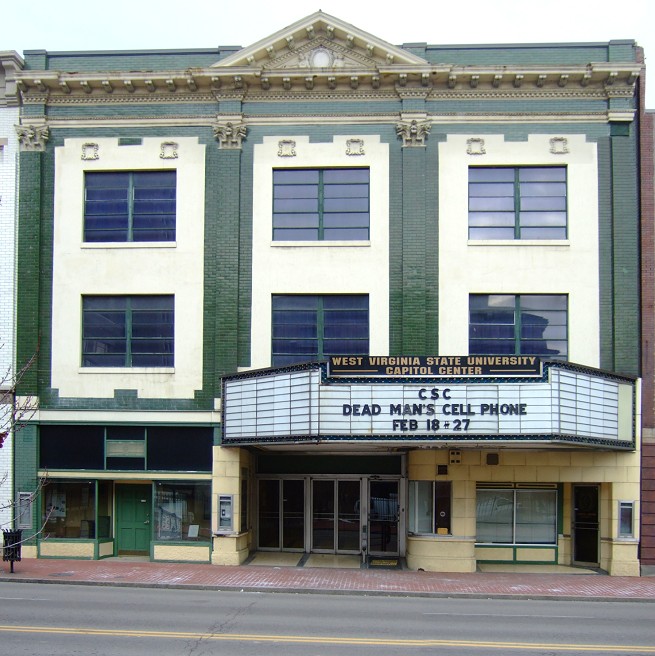
| That's
right, the old Plaza Theater was turned into the Capitol Theater
in 1921. The Plaza finally went out of business in 1919. It
was purchased by a couple of businessmen and completely remodeled to
the point that the interior didn't look a thing like it had before. By
now the movies were all the rage, and the Capitol was born. They
tried some more live stage shows for awhile, but couldn't compete with
the very opulent Kearse Theater just down the block. So from then
on, it was mostly movies with occasional stage shows. In 1923,
the Capitol was gutted by fire. It was rebuilt once again as you see it
today. Notice that the outside of the building has remained the
same as the Plaza, except for the windows and doorway. |
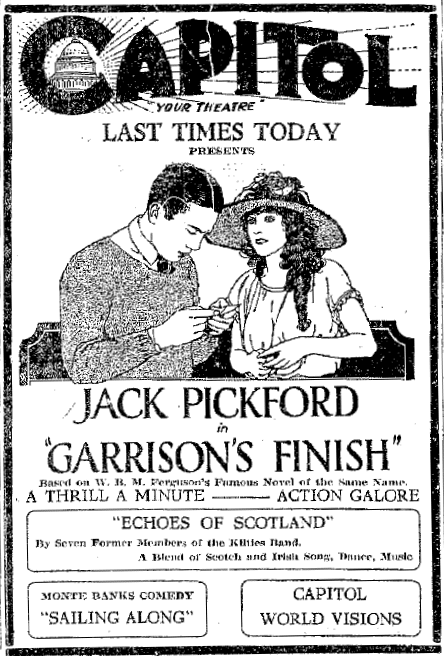
Ad from 1923, same year as the big fire.
NOW FOR A SPECIAL PHOTO
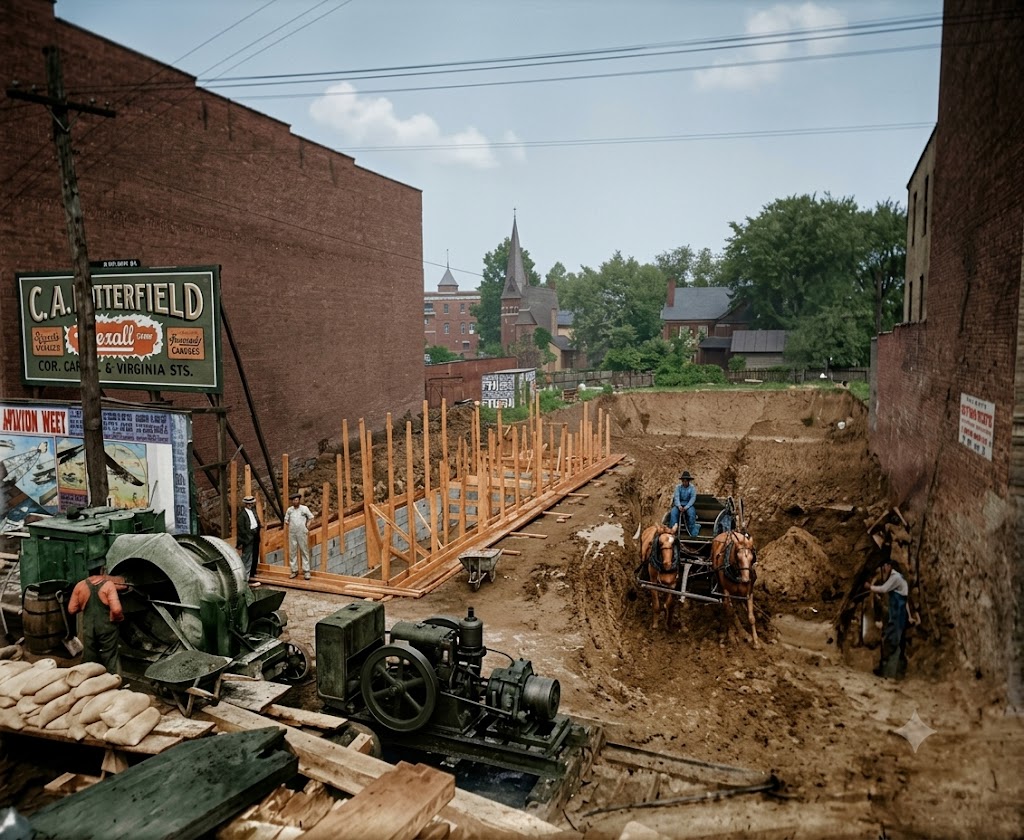
| You're
looking at the foundation being laid for the old Plaza Theater on
Summers Street! As the Plaza Theater opened in 1912, we
must assume that this photo was taken around 1910 or so. Looking
towards the background, you can see the steeple of the old Charleston
City Hall. To the right on the wall, you can see a sign.
That sign says that the new Plaza Theater will be built on this
spot. Let's take a closer look at the other signs: |
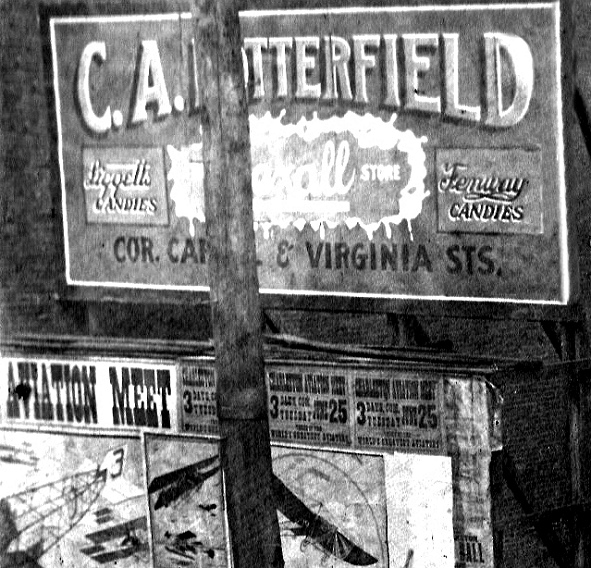
| It's
always been typical to rent out space for signs and billboards on
construction property. Here we have a Potterfields sign "The
Rexall Store" selling "Fenway Candies" at the corner of Capitol &
Virginia Streets. Below are posters and Bills publicizing an
aviation meet! Imagine that! Air shows in 1910 here in the
area! Only 25 cents got you in to see something that you probably
had never seen before in your life! It had to be absolutely
astounding to watch back then. |
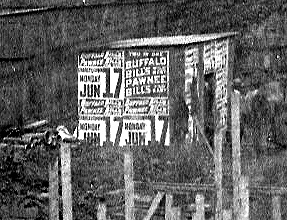
Also in the photo is this
shack promoting Buffalo Bills Wild West Show. The old Wild West
meets new technology head to head. What a time to have lived
in! People were still using mostly horses, while airplanes flew
above!
|
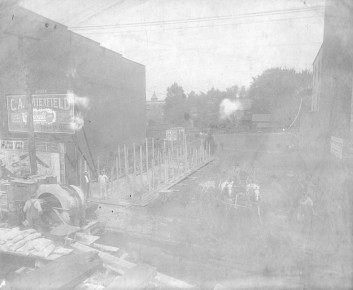
This is how the washed-out photo looked
when I started. Due to damage, almost hopeless to repair.
See the Capitol Projectors HERE

Back to The Nineteen
Hundreds
Back to MAIN Index
|