Iron Ore in Our
Area
In the mid to late 1800s, it was thought
that the Kanawha Valley was rich in Iron Ore. Several
furnaces were started, including near the mouth of Magazine
Hollow, near the mouth of Davis Creek, and around the Fort Hill
area just to name a few. Bigley Ave is named for J.
Bigley, who came here to mine iron ore from Magazine Hollow. Most
of the companies disbanded before going into full production,
while a couple tried and failed. The reason was that they
discovered that ore here was not of the best quality and the cost of
smelting it was too expensive. Better ores were discovered in
other states like Ohio for instance. There is one place where the
remnants of an iron ore facility still stands. It's near the
Northbound exit ramp of Corridor G, not far from the Southside
Expressway.
|
|
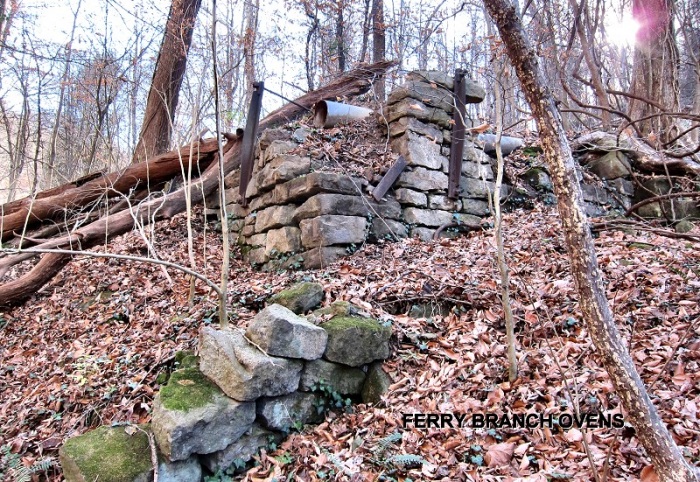
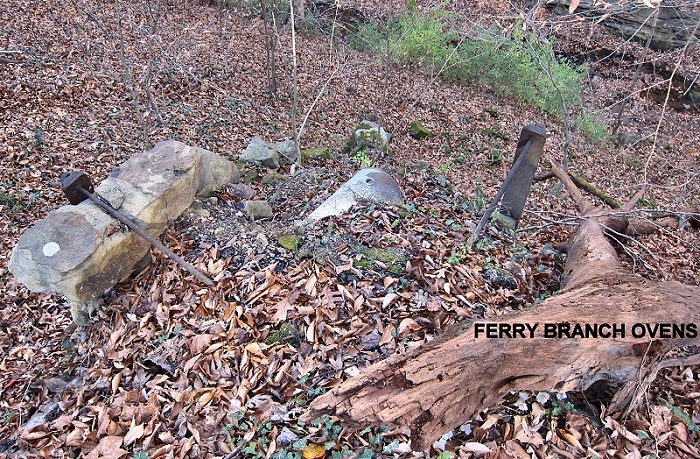
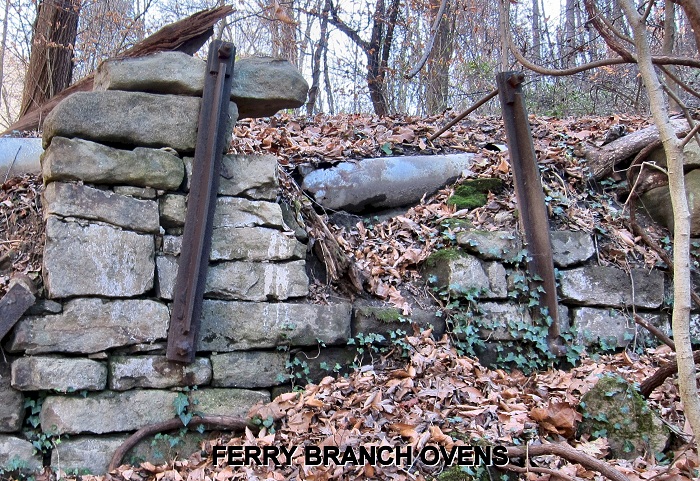
What you are looking at are the remnants of
19th-century iron ore roasting ovens or a localized test furnace.
What they did: Before iron ore could be shipped or smelted, it
often had to be "roasted" in open stone ovens to burn off sulfur,
moisture, and impurities. The hillsides of Ferry Branch contained a
10-foot-thick layer of clay deeply stained with wavy red bands of iron
ore (iron oxide).
The Civil War
Connection: During the Civil War, the Union Army established a
massive camp right at the mouth of Ferry Branch and built Fort Scammon
directly at the top of that exact hill (Fort Hill) to protect the
valley. The military heavily utilized the local stone, existing
clearings, and early primitive iron forges in the area.
After the Civil War, the area was heavily repurposed. In 1900,
the Vulcan Iron Works of Charleston was organized nearby to do heavy
machine, forge, and foundry repair work. The old ovens were simply left
to crumble into the hillside as the Chesapeake & Ohio (C&O)
Railroad cut tracks right through the base of the hill.
|
HERE ARE THE FERRY BRANCH IRON ORE OVENS.
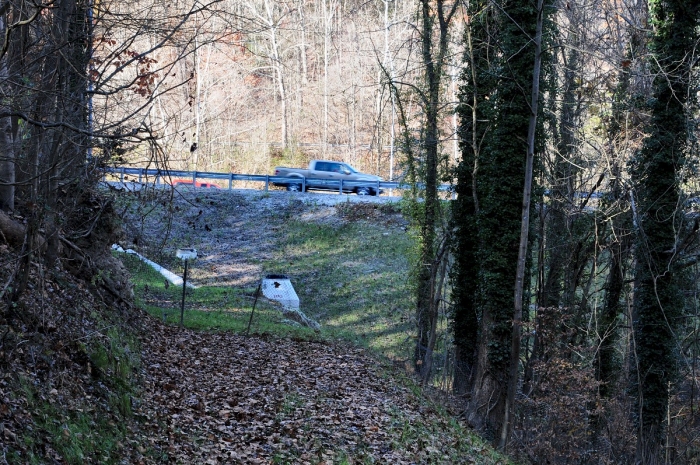
This shows how
close to the Corridor G ramp in Charleston the ovens are located.
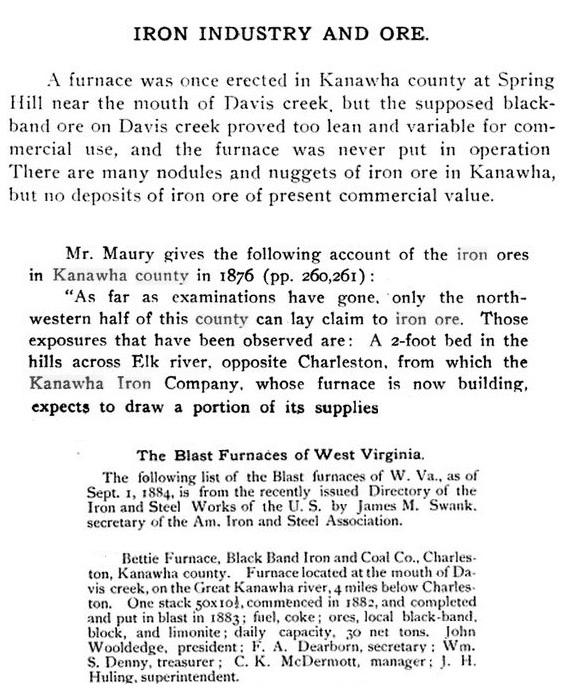
*The mouth of Davis Creek was known as
Spring Hill back in the day.
*The first article above was written some
years before a second try was made at that location.
* The second article is the Ferry Branch
site.
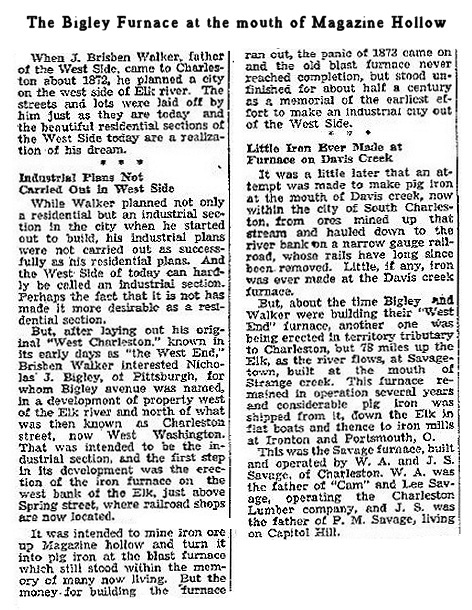
On to the 1911 Photos
Back
To Main Index
©
COPYRIGHT
All
content including articles and photos on this website Copyright 2013 by
J. Waters. All images on this website are used with
permission or
outright ownership of J. Waters.
All
newspaper articles
are courtesy of the Charleston Gazette or Daily Mail for the express
use of the author. You do NOT have permission to use any image, article
or material without permission from the author. You do NOT have permission to pull photos from
this website and post them to Facebook or any other website. Any
material used without permission will be subject to creative copyright
laws.
|
|